

Interview practice Interview type
Product sense interview practice
Product sense rounds look open-ended but are graded on a tight loop: users → problems → solutions → metric, with a defensible choice at each step. Candidates rarely fail by missing a step on the list. They fail when the interviewer asks "why that one?" at a step they rushed.
Free tier. No credit card required.
What this interview actually evaluates
- Segment choice under challenge
- Anyone can list three user segments. The scored moment is defending why you'd build for the one you picked — and what evidence would flip you.
- Problem depth
- Pain points that come from real observation, not category clichés. "Discovery is hard" is filler; "listeners abandon 40-minute episodes at commute end" is sense. (Invent honestly — plausibility is graded, precision isn't.)
- Solution trade-offs
- The rejected alternative is half the answer. Solutions presented without a losing option read as brainstorming, not judgment.
- The one metric
- Choosing a success metric that would genuinely change your decision — plus the counter-metric that keeps it from lying to you.
Questions in this shape
Illustrative examples — practice sessions draw from calibrated question pools for your level.
- “How would you improve Spotify for podcasts?”
- “Design a product to help people cook with what's already in their fridge.”
- “Should Maps add a social layer? Argue both sides, then decide.”
- “Pick your favorite product. What's its weakest user moment, and what would you do?”
- “You can only ship one of these two features. How do you choose?”
How to prepare
- 1
Choose fast, defend deep
Spend seconds picking a segment and minutes defending it. Interviewers grade the defense; candidates burn time perfecting the pick.
- 2
Say the structure once, then stop narrating it
One sentence of roadmap ("users, problems, solutions, metric") orients the interviewer. Repeating the framework at every step reads as training wheels.
- 3
Rehearse the 'why that one?' moment
After every choice you make out loud, imagine the interviewer asking "why not the other one?" — and answer it before they do. This single habit converts more product-sense rounds than any question bank.
Practicing this on PanelReady
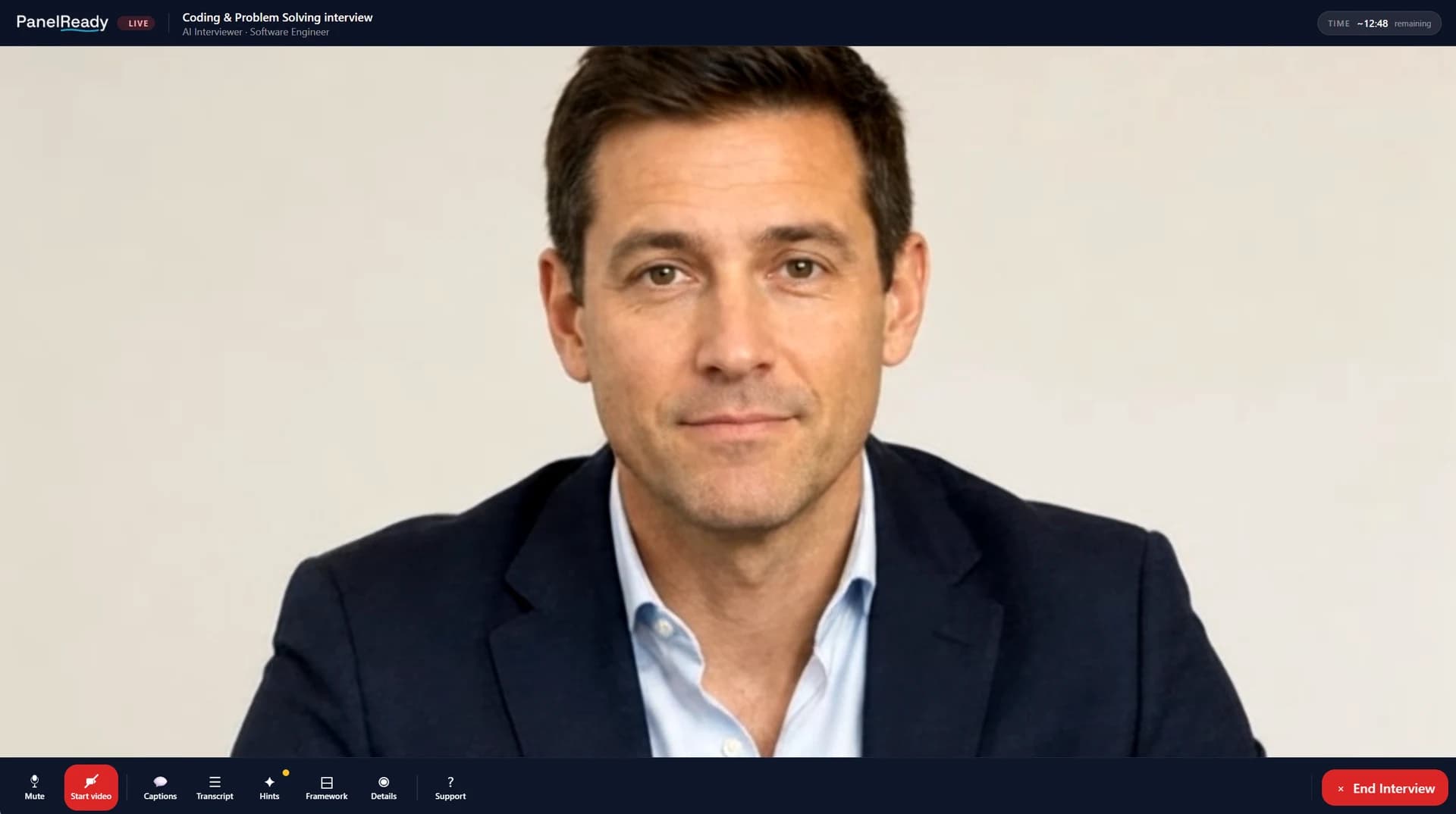
Product-sense questions run inside the Product Management track — the interviewer follows your reasoning, probes the steps you skip (CIRCLES-aware without demanding it), and scores structure, empathy, prioritization, and trade-offs against your target level.
Feedback in this shape (sample)
“I'd focus on podcast discovery because discovery is a big problem.”
Segment and problem chosen, but not defended: which listeners, what observed behavior, and why this problem over creation or retention? The follow-up landed exactly there.

See a full sample reportKeep practicing
Reading about interviews isn't practicing them.
Take one practice interview and see where your answers stand.