

Placement readiness, built in laps.
Give every student repeated, realistic interviews for the roles your campus places into, weeks before the employer visits. See readiness across the batch as the season nears.
For placement cells, campus placement teams and employability programs. Plans are sized to the batch.
Fourteen weeks before the first drive. Final-year engineering, 240 students, an example batch.
- 1,162
- Practice interviews before the first drive
- 191of 240
- Students who practised three times or more
- 10
- Weeks of practice before the season
Follow a season, from the first assignment to the batch's readiness.
Each step is a real screen with example data. Pick a step and open the numbered points.
Set the batch up before the season, by role family
Your team does this- You
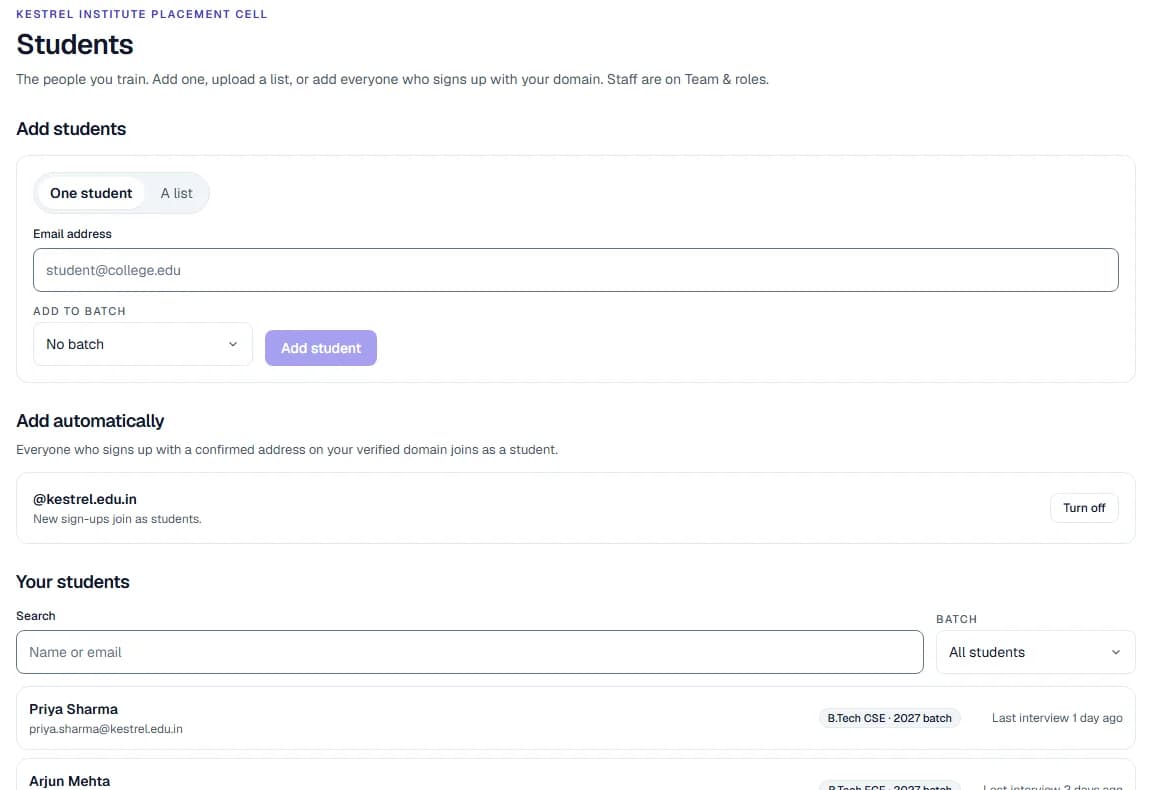
- Put each batch in a cohort, pick the role families your campus places into, and set the practice cadence before employer visits are announced.
- PanelReady
- Builds the interviews for those roles and levels, invites every student, and reminds the ones who have not started.
- You get
- A practice habit in the whole batch, weeks before the first drive.
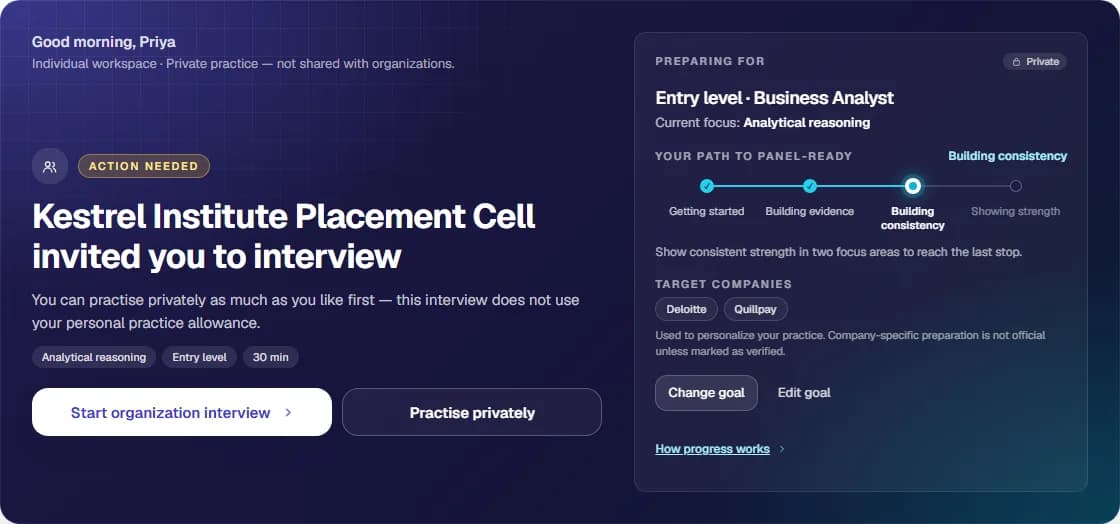
Readiness is built in laps. The interviewer asks the follow-up every time.
Students do this- You
- Nothing. Workshops teach the skills; the laps happen on the students' own time.
- PanelReady
- Runs a realistic spoken interview for the role, presses on vague answers, and holds the answer to the level the employer expects.
- You get
- Students who have survived the follow-ups before an employer asks them.
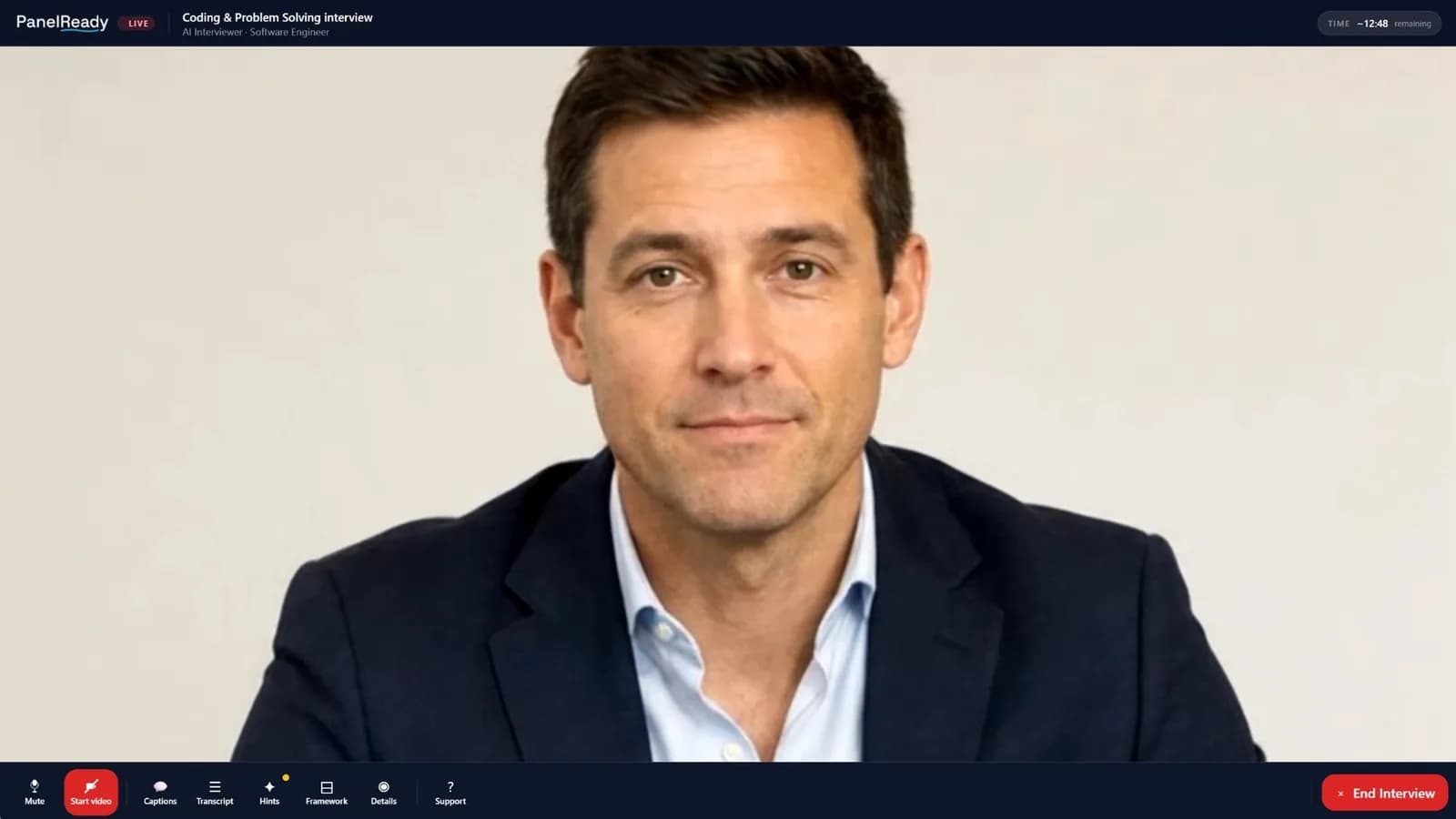
Specific feedback after each lap, then the weak area again
PanelReady does this- You
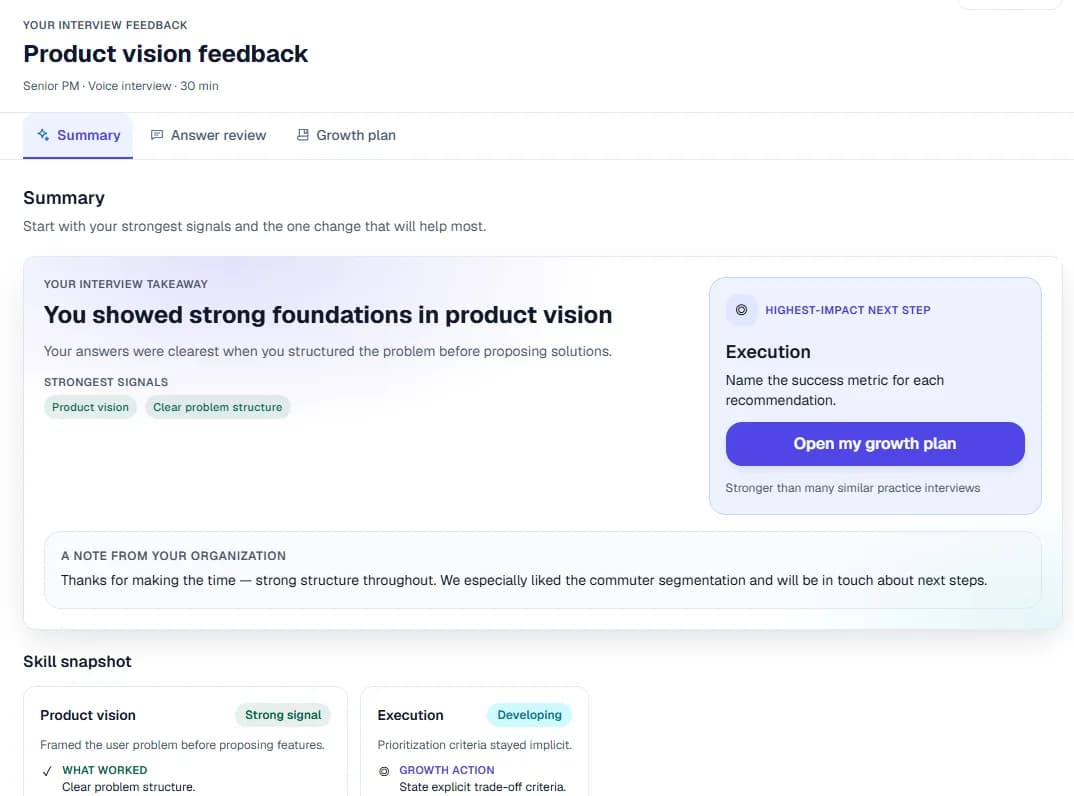
- Decide whether students see feedback straight away or after a mentor has read it.
- PanelReady
- Names what held up and what was missing, in words written to the student, with the evidence behind each band.
- You get
- Students who re-run their weak area until the improvement shows.
Readiness across the batch, so mentoring lands where it is needed
Your team does this- You
- Open the cohort view before a workshop or a mentoring week.
- PanelReady
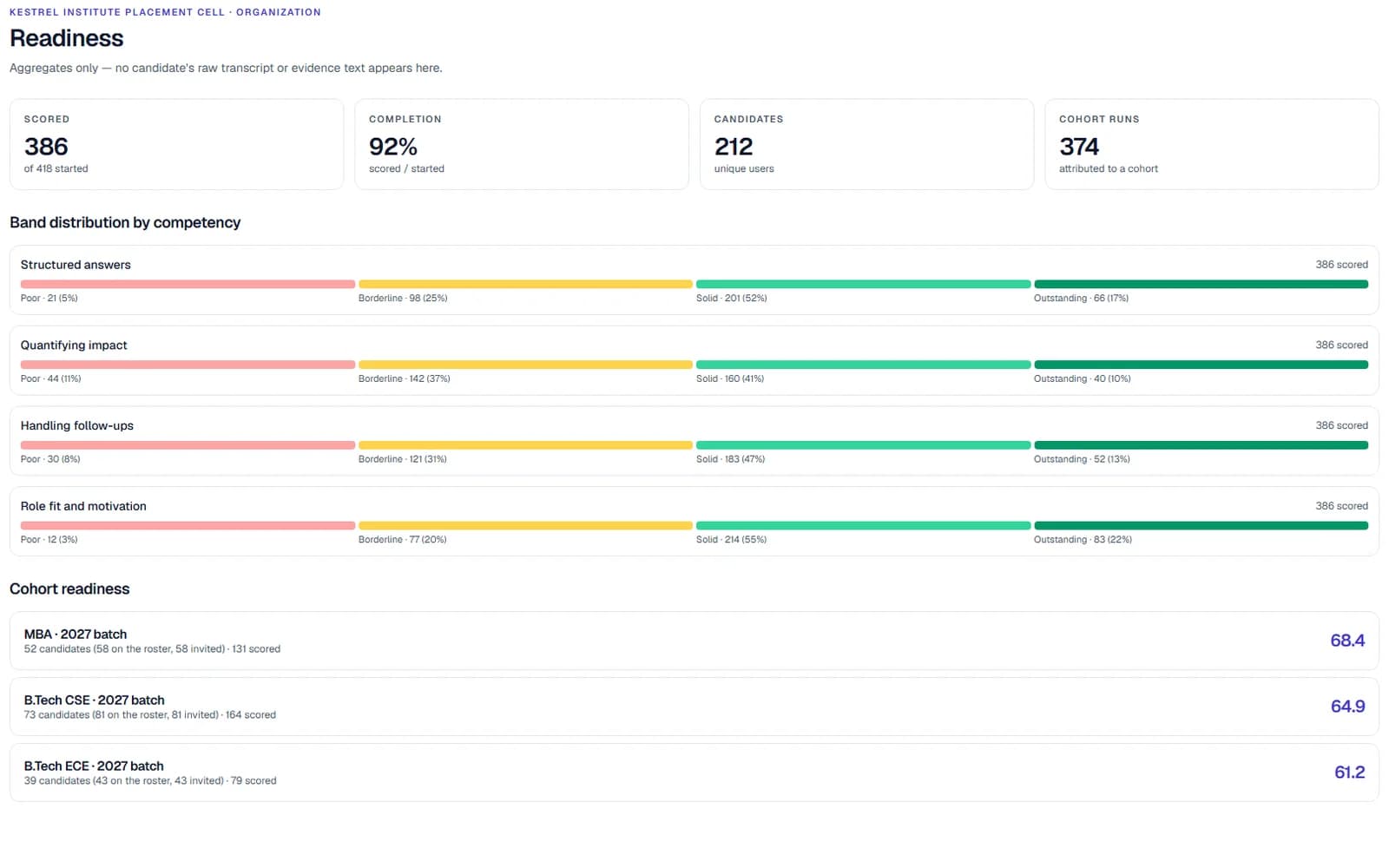
- Rolls every scored interview up by cohort and by competency: participation, completion and the improvement areas that repeat.
- You get
- The workshop topic the batch needs, and the students who need a person. Never a ranking.
Courses for the batch, beside the practice.
A course holds lessons, quizzes, exercises reviewed in words and mock interviews with the interviewer your students already practise with.
- PanelReady's courses
- Every published PanelReady course is in your students' library unless you switch it off.
- Your training material
- Write a course, or import a text or Markdown document and get a draft section to edit. Nothing goes live until you publish it, and it stays private to your students.
- What your team sees
- For each course: enrolments, completions and how many students were active in the last 30 days.
Published now: AI Engineer Interview Preparation (157 lessons), Forward Deployed Engineering Interviews (496 lessons).
Browse courses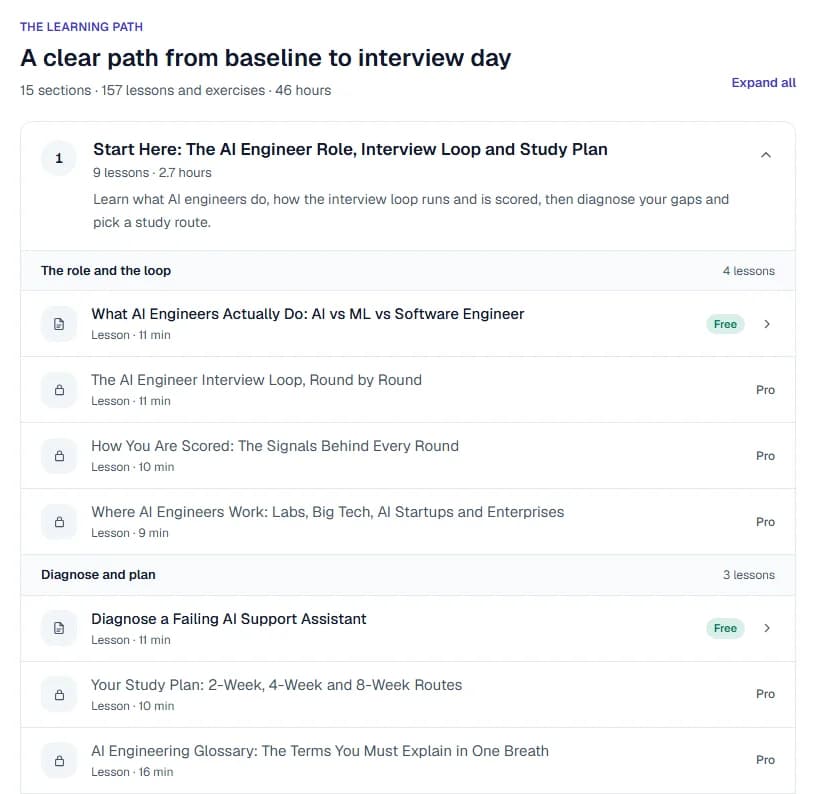
Readiness is built in repetitions, and repetitions do not scale by hand.
A placement team preparing hundreds of students for a dated season can teach, schedule and mentor. It cannot sit through the thousands of practice interviews a ready batch represents.
The season has a deadline.
Employer visits arrive on a date. Readiness has to be built before it, not discovered during it.
One workshop is not repetition.
A placement workshop can teach interview skills. It cannot give every student enough interview repetitions.
Practice concentrates in the wrong students.
Confident students book the mock slots. The students who most need reps quietly avoid them.
What PanelReady will and will not do.
- Consent firstAgreed before anything records.
- RecordedOnly the interview agreed to.
- Kept for a set windowThe workspace's retention policy.
- DeletedOn schedule, or on request.
- Practice belongs to the student and your placement team. Nothing is shared with employers, and no student is ranked.
- You decide whether feedback is released straight away or after a mentor has read it.
- Students join through an invite or a join link and sign in on a page with your institution's name.
- PanelReady is for practice. It never helps anyone during a real interview.
The questions placement offices ask first.
A learning program rather than a placement season? PanelReady for Education
Can students practise for specific companies or job descriptions?
Yes. Students can tailor a practice interview to a specific company at setup, or paste a job description to rehearse that exact opportunity. Twelve role tracks are covered, from software engineering and data roles to sales, marketing and business analysis, each scored against the rubric for that level.
What does the placement team see?
The cohort view shows participation, completion, readiness by competency, and the improvement areas that recur across the batch. Your institution controls how feedback is released to students. This is readiness for support and mentoring, never a ranking of students.
What do students need to start?
A browser and a microphone. Students join through an email invite or a join link, sign in on a page with your institution's name, and can practise straight away. No installs, no scheduling.
Can we add our own placement training material?
Yes. Your placement team can write courses or import a text or Markdown document as a draft section, and what you publish stays private to your students. PanelReady's published courses are in their library too, and you can switch any of them off.
How is it priced for a placement cell?
We scope the plan and practice allowance to your cohort and program. Start with a pilot discussion to confirm seats, usage and pricing before committing.
Does this replace our placement training?
No. It sits between your training and the employer interview. Workshops teach the skills; PanelReady provides the repetitions and the diagnosis; your team spends its time on the students who need human coaching most.
Tell us about your batch.
Tell us about the batch you would start with and the role they are preparing for. We set up a cohort for them, and they practise live AI interviews before placement season, free for the pilot.
Start your free pilot
For a placement cell, a department or one batch. Use your institution email address.
Want to see it before you start? Book a demo
Pilot it with one batch before placement season.
Pick one department or batch, run it alongside your existing placement training, and judge it on participation, repeat practice, and what students say. The Teams plan is priced to your program.
What a pilot answers for you
- Do students practise without being chased?
- Do they practise again after feedback?
- Which weak areas recur across the batch?
- Does readiness visibly rise before the season?
- Where should mentoring go?
- Does it ease the mock interview queue?