

PanelReady

Interview practice Interview type

Behavioral interview practice

Everyone knows STAR. Almost nobody's STAR answer survives the second question — because the frame tells you to describe a situation, but the interviewer is hunting for two things the frame doesn't force: the decision that was yours alone, and the change you can measure. Behavioral rounds are won on follow-ups.

Free tier. No credit card required.

What this interview actually evaluates

Owned decisions
"We" stories trigger the follow-up "what did YOU do?". Strong answers isolate your call before it's asked for.
Measurable results
A result you can size ("from X to Y") reads as evidence; a direction ("it improved") reads as hope.
Genuine trade-offs
Stories without a cost sound rehearsed. What did the decision give up? Who disagreed?
Recovery under probing
The real test: when the interviewer challenges your story's weakest link, do you add depth or repeat yourself?

Questions in this shape

Illustrative examples — practice sessions draw from calibrated question pools for your level.

  • Tell me about a time you disagreed with your manager.
  • Describe a decision you made with incomplete information.
  • Tell me about a failure. What did you change afterwards?
  • When did you have to influence someone without authority?
  • What's the hardest feedback you've received, and what did you do with it?

How to prepare

  1. 1

    Build answers around the decision, not the situation

    Trim the S and T to two sentences. Spend the answer on the fork in the road: the options you saw, the one you chose, and why. That's the part follow-ups attack.

  2. 2

    Pre-commit your numbers

    Before the interview, write the measurable result of each story as "from X to Y". If a story has no number, find its observable change (shipped on date, incident count, adoption) — or retire the story.

  3. 3

    Practice being pushed

    Have your weakest claim challenged out loud: "you said the launch succeeded — by whose measure?". The first three times feel terrible. That's the rep that matters, and it's exactly what a question list can't do.

Practicing this on PanelReady

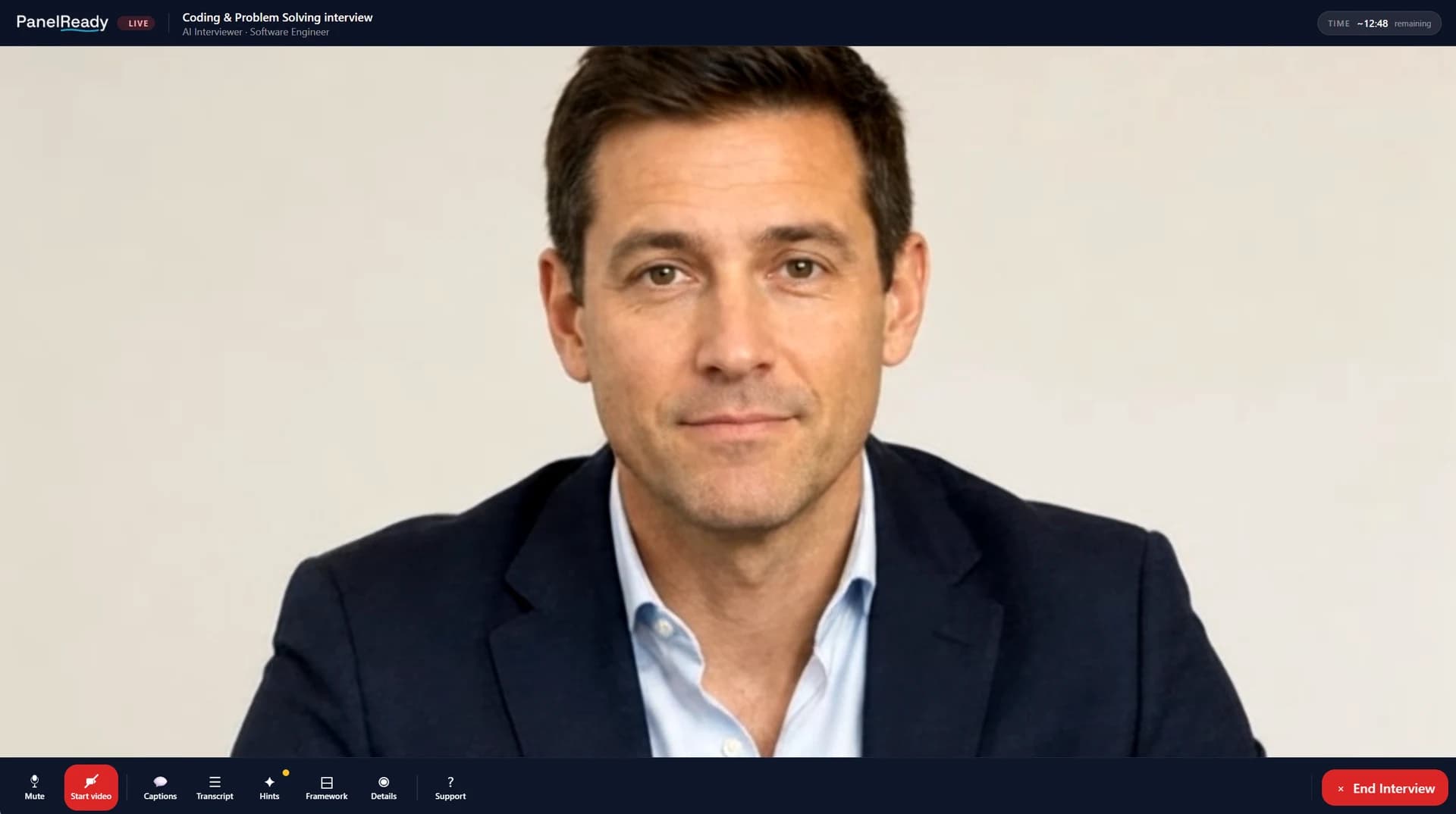
Behavioral questions run inside every PanelReady role track — the interviewer probes your stories with follow-ups tied to what you said, recognizes STAR without requiring it, and scores structure, ownership, and impact against your target level.

Feedback in this shape (sample)

“We turned the project around and it shipped successfully.”

You described what the team achieved but never isolated the decision you personally owned — and “successfully” has no measure attached.

See a full sample report

Reading about interviews isn't practicing them.

Take one practice interview and see where your answers stand.